The Motorist Guide to LTO registration renewal 2026: fees, steps & mistakes
 Car Registration Renewal in the Philippines 2026: Fees, Steps, and Common Mistakes
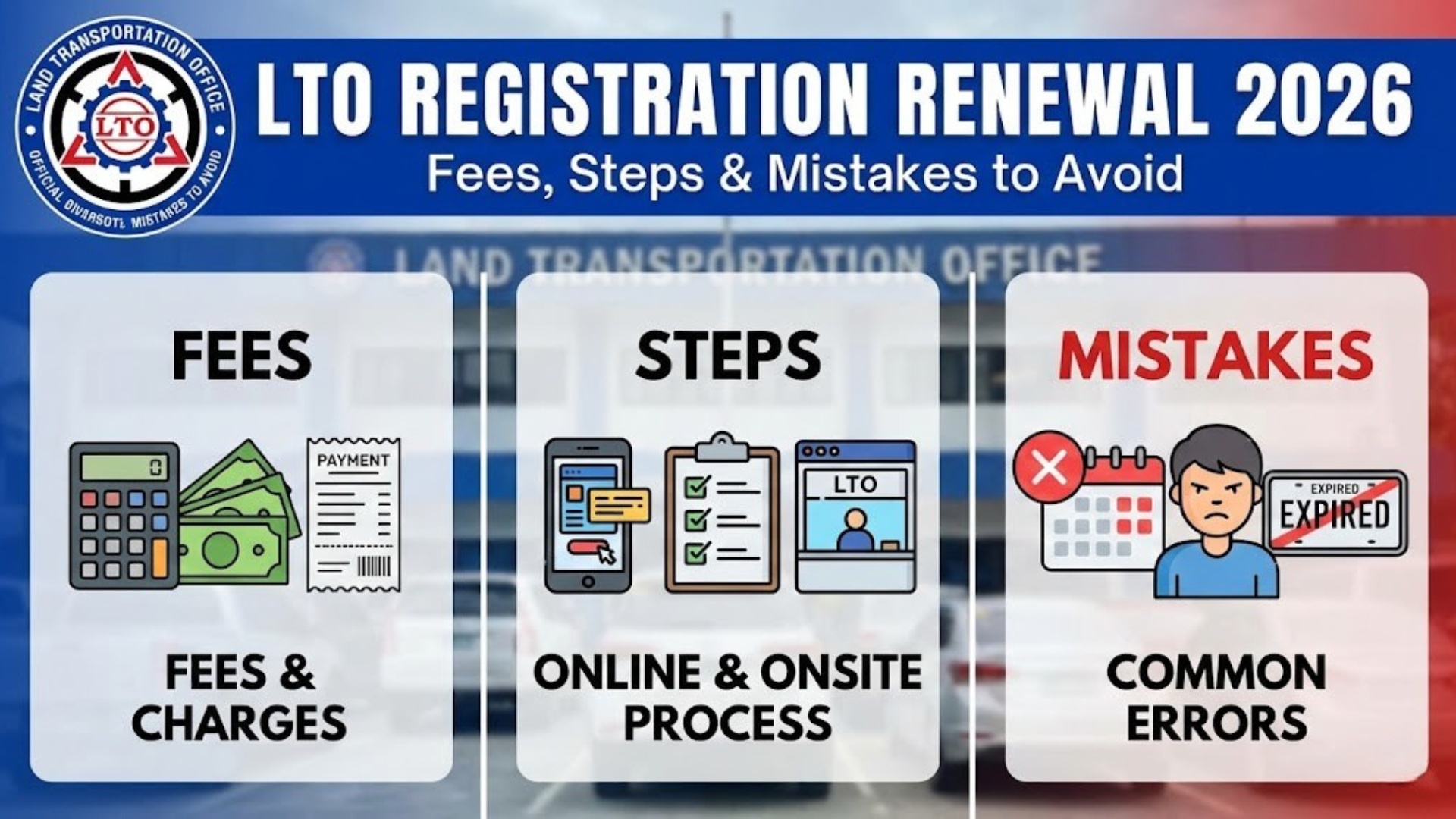
Car registration renewal in the Philippines looks straightforward on paper, yet every year many drivers face long queues, rejected applications, and unexpected penalties. Missing one requirement or misunderstanding a step can quickly turn a simple renewal into a stressful and costly experience.
With updated procedures, inspections, and digital systems in place for 2026, knowing how car registration renewal works, how much it costs, and what mistakes to avoid is more important than ever. This guide explains everything Filipino drivers need to know to renew smoothly and decide whether renewing still makes financial sense.
Who Needs to Renew Car Registration and When
All motor vehicles registered in the Philippines must be renewed annually with the Land Transportation Office. Renewal schedules are based on the last digit of the plate number, which determines the registration month, while the second-to-last digit determines the week of renewal.
Renewing within your assigned schedule helps you avoid penalties and reduces waiting time. Late renewal results in fines that increase the longer the delay continues.
Car Registration Renewal Requirements in 2026
Before heading to an LTO office or authorized renewal center, drivers must prepare all required documents. Missing even one requirement can lead to rejection.
Key requirements include:
Original Official Receipt (OR) and Certificate of Registration (CR)
Compulsory Third Party Liability (CTPL) insurance
Motor Vehicle Inspection System (MVIS) result
Emission test result, if required
Valid government-issued ID
Authorization letter, if renewing on behalf of the owner
Ensuring all documents match in engine number, chassis number, and plate details helps avoid unnecessary delays.
Car Registration Renewal Fees Explained
Mandatory Fees You Should Expect
Car registration renewal fees vary depending on vehicle type, age, and engine displacement. The main cost components include the Motor Vehicle User’s Charge (MVUC), legal research fee, insurance, and inspection-related charges.
MVUC is the largest portion of the cost and increases as engine displacement increases. Insurance and inspection fees add to the total, which is why renewal costs may feel higher year after year.
Late Renewal Penalties
Failing to renew on time results in penalties that accumulate monthly. Even a short delay can significantly increase the total amount payable, especially for vehicles that have gone unregistered for several months.
Late renewal not only costs more but also exposes drivers to fines and apprehension if caught on the road.
Step-by-Step Guide to Renewing Car Registration
Step 1 – Secure Insurance and Inspection
Before visiting LTO, drivers must obtain valid CTPL insurance and complete the required vehicle inspection. These steps confirm that the vehicle is roadworthy and compliant with safety standards.
Step 2 – Proceed to LTO or Authorized Center
Once documents are complete, drivers can proceed to an LTO branch or authorized renewal site. Submitting complete and accurate documents speeds up processing.
Step 3 – Payment and Release of OR
After assessment and payment, the updated Official Receipt is released, confirming that the vehicle registration is valid for the year.
Can You Renew Car Registration Online in 2026?
The Land Transportation Management System (LTMS) continues to expand digital services, but not all vehicles are eligible for full online renewal. Some cases still require physical inspection or document verification.
Drivers should check LTMS eligibility in advance to avoid wasted trips and confusion.
Common Mistakes That Delay Car Registration Renewal
Missing or Invalid Insurance
Using expired or non-compliant insurance is one of the most common reasons for rejection. Always verify that CTPL coverage meets LTO requirements.
Incorrect or Failed Inspection Results
Inspection failures often happen due to minor issues such as worn lights, faulty brakes, or emissions problems. Addressing these early saves time and repeat visits.
Renewing Outside the Assigned Schedule
Ignoring the plate number schedule leads to penalties and longer processing times, especially during peak renewal months.
Incomplete Authorization Documents
When renewing on behalf of someone else, missing authorization letters or IDs can stop the process entirely.
Is It Still Worth Renewing Your Car Registration?
For some vehicles, renewal costs combined with rising maintenance expenses may outweigh the car’s remaining value. Older vehicles, in particular, often face higher inspection failures and repair bills.
If renewal feels like an annual financial burden, it may be time to reassess whether keeping the car still makes sense.
Expert FAQ Section
1. Can I renew car registration without the owner present?
Yes, as long as you have a valid authorization letter and complete documents.
2. What happens if my registration is already expired?
You can still renew, but penalties will apply based on how long the registration has lapsed.
3. Do I need MVIS every year?
Yes, vehicle inspection is a mandatory part of annual renewal under current LTO regulations.
4. How long does car registration renewal take?
With complete documents, it can be completed within the same day, depending on branch volume.
5. Can I drive with an expired registration?
No. Driving with expired registration may result in fines, apprehension, and vehicle impoundment.
Renew or Reconsider with Motorist Philippines
Car registration renewal is part of responsible ownership, but when costs keep rising, selling may be the smarter choice. Motorist Philippines offers trusted sell car services and free car valuations based on real buyer demand.
If renewal fees, repairs, and penalties are adding up, it may be time to explore your options instead of spending more on an aging vehicle.