Everything you need to know about transferring car ownership in the Philippines
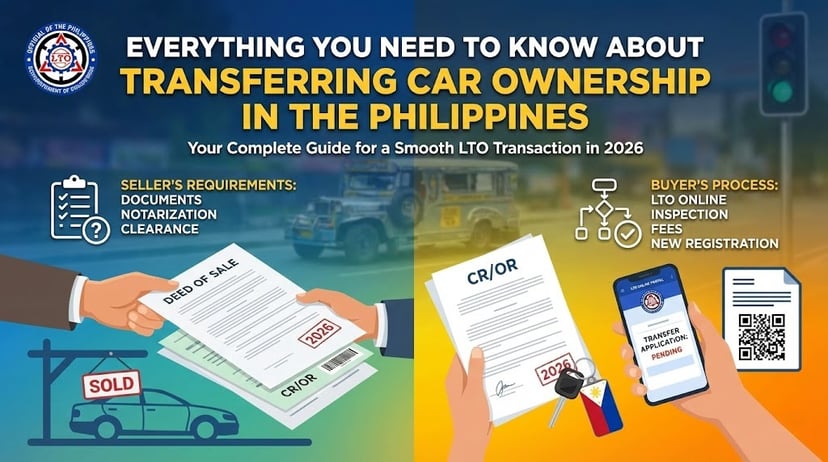 Everything You Need to Know About Transferring Car Ownership in the Philippines
Transferring car ownership in the Philippines can seem like a daunting task, but with the right guidance, it’s a straightforward process. Whether you're selling your vehicle, buying a second-hand car, or inheriting a vehicle, understanding the LTO requirements and knowing the proper steps can save you time and stress.
Why You Need to Transfer Car Ownership
Car ownership transfer is important for legal protection and to avoid liabilities such as unpaid fines or accidents. The new owner must ensure the car is officially registered under their name to comply with traffic laws, and it’s crucial for your own protection as the seller to complete the process.
Documents Required for Car Ownership Transfer
To transfer ownership, you will need to prepare several documents, including:
Original OR/CR (Official Receipt and Certificate of Registration)
Notarized Deed of Sale (for private sales)
Valid IDs of both the seller and buyer
Proof of Payment of LTO Fees (transfer fee, penalties, etc.)
CTPL Insurance (Compulsory Third-Party Liability Insurance)
Additional documents may be required in certain cases, such as if the car is encumbered (still under a loan) or if the owner is deceased.
The Step-by-Step Process to Transfer Car Ownership
The process involves several key steps:
Prepare Documents – Ensure that all the required documents are complete.
Complete the Deed of Sale – This is a legally binding agreement between the seller and buyer.
Submit the Documents to LTO – Visit the nearest LTO branch and submit your documents for processing.
Pay the Fees – LTO will charge a transfer fee, which varies depending on the vehicle type.
Inspection (if applicable) – Depending on the car’s condition, an inspection might be required.
Receive New OR/CR – Once everything is processed, the new owner will receive an updated Certificate of Registration.
Common Issues During Car Ownership Transfer
Several issues can cause delays, such as:
Unpaid traffic violations or LTO alarms linked to the vehicle.
Discrepancies in car records (e.g., mismatched engine numbers or plate numbers).
Expired documents, which will require updates before proceeding with the transfer.
Transfer of Ownership for Special Cases
Selling a Car with a Loan: You must first settle the loan, obtain a Release of Chattel Mortgage, and update the LTO records.
Inherited Cars: If you’ve inherited a vehicle, you’ll need an extrajudicial settlement of estate or a court order to transfer ownership.
Transferring car ownership in the Philippines is a straightforward process as long as you have the right documents and follow the necessary steps. Whether you’re a buyer or seller, ensure that all legal requirements are met to avoid future complications and ensure a smooth transaction. For those looking for assistance, Motorist Philippines offers a streamlined process for buying, selling, and transferring vehicles with ease.