Expressway Toll Rates Philippines 2026: The Cost of Suburban Commuting
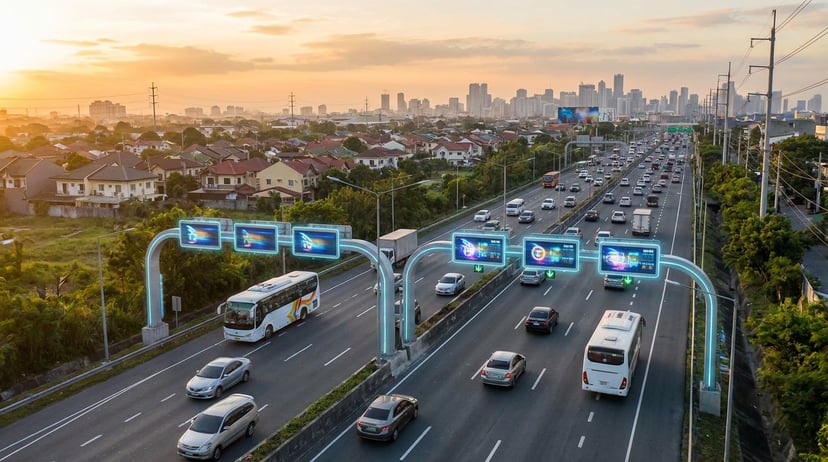 The True Cost of the "Suburban Dream" in 2026 — Are Expressway Tolls Draining Your Salary?
For years, the ultimate middle-class dream in the Philippines was to buy a spacious house in the suburbs—Laguna, Cavite, or Bulacan—and drive into Metro Manila for work. But in 2026, the financial reality of that daily commute is hitting harder than ever. As the Toll Regulatory Board (TRB) sets and approves updated toll rates for all 13 Philippine expressways, the cost of convenience has skyrocketed. If you are a daily commuter relying on your private vehicle, the updated toll matrix might be quietly draining a massive chunk of your monthly salary.
The 2026 Toll Matrix Reality Check
Whether you are heading north or south, taking the expressway is no longer a cheap convenience. For those commuting from the south, the South Luzon Expressway (SLEX) runs from Magallanes to Calamba with 15 toll plazas. A Class 1 vehicle driving the popular Magallanes to Alabang route now pays ₱118. If you travel the full length from Magallanes to Calamba, the rate reaches ₱244.
To bypass EDSA traffic entirely, many drivers rely on the Metro Manila Skyway Stage 3; however, traveling from Buendia to Balintawak costs an additional ₱264 for Class 1 vehicles. For northern commuters, the North Luzon Expressway (NLEX) connects Balintawak to Dau with 18 entry/exit points, and the full route costs ₱411. When you calculate a round-trip commute over 20 working days a month, the toll fees alone can easily surpass ₱10,000 to ₱15,000 monthly.
The Hidden Cost of the Daily Grind
Beyond the toll gates, the sheer volume of vehicles on the road adds hidden costs to your commute. SLEX currently sees an astounding 366,750 vehicles daily, with traffic growing at a steady rate year-over-year. Even with a 99% RFID adoption rate utilizing the Autosweep system, rush hour slowdowns are inevitable. This stop-and-go traffic drastically reduces your car's fuel efficiency, accelerates engine wear, and increases maintenance frequency. When you combine fuel costs, premium CBD parking rates, and skyrocketing toll fees, keeping a standard internal combustion engine (ICE) car for a 50-kilometer daily commute is becoming financially unsustainable.
Why Commuters Are Rethinking Their Garage
Instead of continuing to bleed money on daily tolls and fuel, savvy suburbanites are shifting their transportation strategies. Many are choosing to sell their aging, fuel-heavy daily drivers. By cashing out their vehicles while they still hold value, these commuters are either upgrading to highly efficient hybrid or electric vehicles (which significantly lower running costs) or transitioning entirely to premium Point-to-Point (P2P) buses and carpooling networks. Selling a costly daily driver not only frees up monthly cash flow but also reclaims the mental peace lost to driving in heavy expressway traffic.
Should You Keep or Sell Your Commuter Car?
If you review your monthly budget and realize your vehicle is costing you more than a small condominium rental just in tolls and fuel, it’s time to re-evaluate. Keeping your car might feel like a necessity for the suburban lifestyle, but the escalating costs of 2026 expressway travel can easily outweigh the convenience. Selling your commuter car now could help you eliminate massive overhead expenses, allowing you to invest your money smarter or upgrade to a vehicle specifically designed to beat the modern cost of commuting.
Expert FAQ Section
1. Who approves the toll hikes for Philippine expressways?
The Toll Regulatory Board (TRB) sets and approves toll rates for all 13 Philippine expressways.
2. How much does it cost to use SLEX and Skyway Stage 3 in 2026?
On SLEX, the popular Magallanes to Alabang route is ₱118, while the full stretch to Calamba is ₱244. Skyway Stage 3 from Buendia to Balintawak costs ₱264.
3. What RFID systems are used on these major expressways?
SLEX and the Skyway System use the Autosweep RFID, while NLEX uses the Easytrip RFID system.
4. How long is the South Luzon Expressway?
SLEX spans approximately 49.56 kilometers, operating with a closed toll system featuring 15 toll plazas.
5. How are toll rates calculated for different vehicles?
Philippine expressways charge based on vehicle class. Class 1 (cars, SUVs) pays the base rate, Class 2 (buses, medium trucks) pays around 1.5 to 2 times the base rate, and Class 3 (heavy vehicles) pays approximately 2 to 2.5 times the base rate.
Your Old Car? Sell It to Motorist Philippines
If the 2026 expressway toll rates are making your daily commute a financial nightmare, it’s time to turn that expensive asset into liquid cash. Instead of burning your salary at the toll plazas, you can sell your car swiftly and use the funds to rethink your daily transit.
Motorist Philippines offers:
Trusted sell car services
Free car valuations based on real-time market demand
Access to a nationwide network of serious buyers
Fast and completely hassle-free process
Before you reload your RFID again—your old car, sell it to Motorist.