Premium vs regular gasoline in the Philippines: Which should you use?
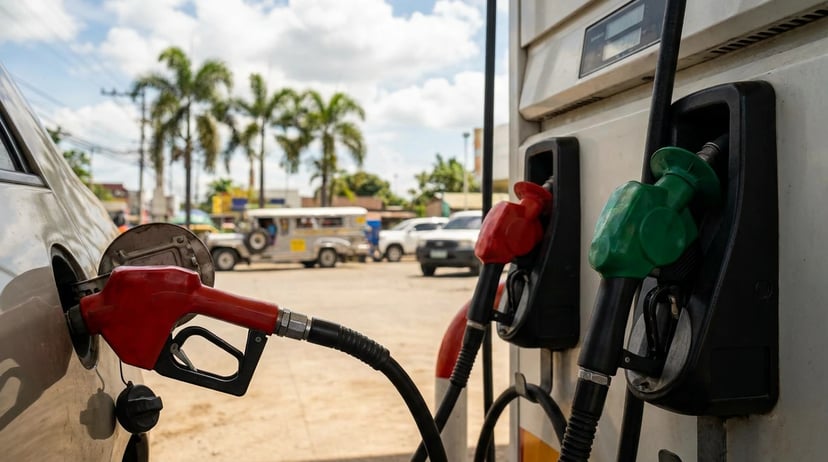 Choosing the Right Gasoline Octane in 2026
Understand What Octane Actually Does
It resists premature explosions. Inside your engine, fuel and air are compressed before the spark plug ignites them. Lower octane fuel (RON 91) combusts easily. Higher octane fuel (RON 95/97) is harder to ignite and resists combusting too early under extreme pressure. "Pre-ignition" or "engine knock" occurs when fuel explodes before it is supposed to, which severely damages the pistons.
Check Your Owner’s Manual or Fuel Door
Follow the manufacturer's strict recommendation. The engineers who built your car have clearly stated the minimum octane requirement inside your owner’s manual and on a sticker inside the fuel filler door. If it says "Minimum RON 91," your car’s computer is perfectly calibrated to run on regular gasoline.
When Premium Fuel is Mandatory
Turbochargers demand high octane. If you drive a European luxury sedan, a high-performance sports car, or a vehicle with a modern turbocharged engine (like the Honda Civic RS), the engine operates under massive compression. Pumping cheap 91 octane fuel into these highly strung engines will cause aggressive engine knocking, forcing the computer to cut engine power to save itself.
The Detergent Additive Myth
All modern fuels clean your engine. Oil companies heavily market premium fuels by highlighting their "cleaning additives." However, Philippine law and Department of Energy standards mandate that all commercial gasoline—including the cheapest 91 octane regular fuel—must contain sufficient detergent additives to keep your fuel injectors and valves perfectly clean.
| Fuel Octane Rating (RON) | Ideal Vehicle Match | Price Expectation |
| Regular 91 | Wigo, Vios, Mirage, Ertiga | Most affordable option |
| Premium 95 | Civic RS, CR-V, Mazda 3 | Mid-tier premium pricing |
| Premium 97 / 100 | Porsche, BMW M, Nissan GT-R | Highly expensive |
EXPERT TIP
If you accidentally pump 95 octane into a car that only requires 91 octane, do not panic. Your engine will burn it normally with absolutely zero damage—you just wasted a bit of money. However, if you accidentally pump 91 octane into a sports car that strictly requires 97 octane, drive very gently and avoid accelerating hard until you can refill with premium fuel.
COMMON MISTAKE
Do not believe the marketing hype that premium gasoline gives your standard Toyota Vios more horsepower or better mileage. The engine's compression ratio is fixed; it cannot utilize the extra knock-resistance of 95 octane fuel.
Choosing the correct gasoline octane is about matching the fuel to the exact mechanical requirements of your engine. By sticking to the recommended RON 91 for your daily commuter, you protect your wallet from unnecessary premium markups.
FAQs
Q1: What does RON mean at the gas station?
RON stands for Research Octane Number, which indicates how much compression the fuel can withstand before prematurely igniting.
Q2: Will premium 95 octane make my car faster?
No, if your engine is designed for 91 octane, pumping 95 octane will not increase your horsepower or make the car accelerate faster.
Q3: Is it bad to mix 91 and 95 octane gasoline?
Mixing them is perfectly safe and will not damage your engine, but the resulting fuel mixture will simply average out to an octane rating somewhere in between.
Q4: Why does my car's manual say "RON 91 or higher"?
This means RON 91 is the baseline requirement. You can safely use higher octane if you want, but you will receive zero performance benefits for the extra cost.
Q5: What happens if I put 91 octane in a turbocharged sports car?
The engine will experience "knocking," and the car's computer will aggressively pull back engine timing to prevent internal damage, making the car feel sluggish and underpowered.
Q6: Does premium gas give better mileage (km/L)?
No, the energy density of 91 and 95 octane fuel is practically identical. Your driving habits dictate your mileage much more than the octane rating.
Q7: Do independent gas stations sell good quality 91 octane?
Yes, independent players strictly adhere to the same Department of Energy quality and additive standards as the major oil companies.
Q8: Why is premium fuel always colored red?
Oil companies add distinct color dyes to different fuel grades simply to help tanker drivers and station attendants avoid mixing them up in the underground storage tanks.
Visit Motorist Philippines today to get a free, data-driven car valuation and navigate your vehicle ownership effortlessly!
