How to spot a flood-damaged second-hand car in the Philippines
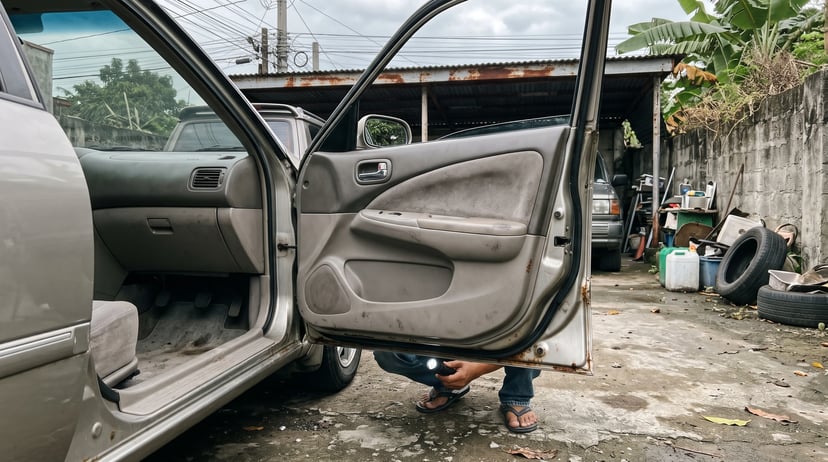 How to Inspect a Used Car for Flood Damage
The Sniff Test
Smell for extreme masking agents. When you open the car door, close your eyes and smell the interior. If it smells like a damp basement or old, wet socks, the carpet padding is full of floodwater. Conversely, if the seller has sprayed three cans of aggressive pine air freshener or soaked the seats in cheap perfume, they are desperately trying to cover up the stench of stagnant mud.
Inspect the Seatbelts
Pull it to the absolute limit. Car detailers clean the seats and the dashboard, but they almost always forget the seatbelt retractors. Pull the driver and passenger seatbelts all the way out to their absolute maximum limit. If you see a distinct watermark, crusty dried mud, or white mold on the very end of the belt strap, the car was deeply submerged in floodwater.
Check the Metal Seat Tracks and Dashboard
Look for unnatural rust. Take a flashlight, kneel down, and look directly underneath the seats at the metal sliding rails. Unpainted metal inside the cabin should never rust under normal conditions. If you see heavy, orange flaking rust on the seat tracks, or on the exposed steering column bolts directly beneath the dashboard, the cabin was flooded.
Test the Electronics
Watch out for electrical gremlins. Floodwater aggressively corrodes copper wiring. Turn the ignition key to the "ON" position without starting the engine; every dashboard warning light should illuminate and then turn off. If the Check Engine or Airbag lights fail to turn on, the seller likely removed the bulbs to hide a permanent electrical fault. Turn on the radio, wipers, A/C, and all windows simultaneously to see if the system shorts out.
| Inspection Area | What to Look For | Significance of Finding |
| Seatbelts | Dried mud at maximum extension | Proof of deep cabin flooding |
| Interior Scent | Mildew or overwhelming perfume | Hiding wet, rotting carpet foam |
| Under the Dash | Flaking orange rust on bare metal | Water reached the steering column |
| Dashboard Lights | Warning lights failing to turn on | Seller is hiding electrical damage |
EXPERT TIP
Open the hood and pull out the engine oil dipstick. If the oil looks like a thick, milky-brown coffee frappe instead of smooth black or amber fluid, do not buy the car. Water has entered the engine block and mixed with the oil, meaning the engine requires a total overhaul.
COMMON MISTAKE
Do not trust a seller just because the exterior paint is flawless and the engine bay is sprayed with shiny silicone dressing. A cosmetic detail costs ₱3,000, which is a cheap investment for a scammer trying to sell you a ₱500,000 piece of ruined metal.
Thoroughly inspecting a second-hand car for flood damage requires looking past the shiny exterior and hunting for hidden corrosion. By utilizing these simple visual and scent-based tests, you prevent yourself from buying a vehicle that is destined for the junkyard.
FAQs
Q1: Will a mechanic know if a car was flooded?
Yes, a trusted, independent mechanic can raise the car on a lift to inspect for trapped mud in the frame rails and severe corrosion on the alternator casing.
Q2: Is a flooded car safe to drive?
No. Floodwater destroys the Supplemental Restraint System (SRS) sensors, meaning your airbags may suddenly deploy while driving or fail to deploy during a real crash.
Q3: Can a flooded engine be fixed?
Yes, but it requires a total engine rebuild (replacing pistons, bearings, and seals) which can cost over ₱150,000, negating any savings you made buying the cheap car.
Q4: Does car insurance cover flooded cars?
Only if the previous owner had an "Acts of Nature" policy, and if they claimed it, the car would likely be marked as a "Total Loss" in the insurance database.
Q5: Why are the headlights foggy on a flooded car?
If floodwater submerges the headlights, dirty water becomes trapped inside the sealed plastic housing, creating a permanent muddy haze on the inside of the lens.
Q6: What is a water line in the engine bay?
It is a faint, horizontal line of dried dirt and grime across the engine block and firewall, indicating exactly how high the floodwater reached before receding.
Q7: Can I clean the mold smell out of a flooded car?
No. The smell is trapped deep inside the thick foam padding underneath the carpet. The only way to fix it is to rip out and entirely replace the interior carpets and seats.
Q8: Are flooded cars cheaper?
Yes, scammers price flooded cars 20% to 30% below standard market value to bait eager buyers into ignoring major mechanical red flags.
Visit Motorist Philippines today to get a free, data-driven car valuation and navigate your vehicle ownership effortlessly!
