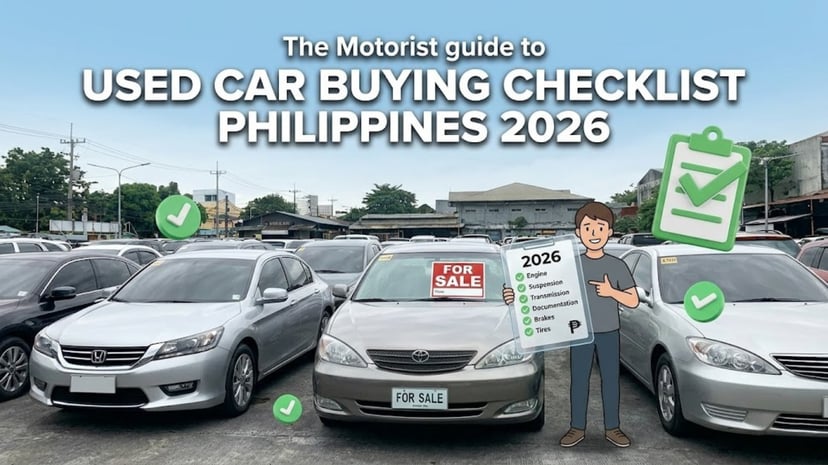
The Motorist Guide to used car buying checklist Philippines 2026
 One Wrong Step Can Cost You Thousands
Buying a used car in the Philippines can be a smart financial move — but it can also become a costly mistake if you skip important checks. From hidden mechanical issues to unpaid loans and incomplete documents, many buyers only discover problems after payment has been made.
If you’re buying used car in 2026, this complete checklist will help you avoid common pitfalls, protect your money, and ensure you make a confident decision.
Step 1 – Verify Legal Documents First
Before inspecting the car physically, confirm that the paperwork is clean and complete.
Check the OR and CR
Ensure the seller provides the original:
Official Receipt (OR)
Certificate of Registration (CR)
Verify that:
Engine number matches
Chassis number matches
Plate number matches
Discrepancies are major red flags.
Confirm No Encumbrance or Loan
If the CR indicates “encumbered,” the car may still have an outstanding loan.
Request:
Bank release documents
Chattel mortgage clearance
Buying a car with an unpaid loan can delay ownership transfer.
Step 2 – Inspect the Vehicle Condition Thoroughly
Exterior Inspection
Check for:
Uneven paint (possible accident repair)
Rust spots
Misaligned panels
Cracks in windshield
Small cosmetic issues are normal. Structural inconsistencies are not.
Interior Check
Inspect:
Dashboard warning lights
Air conditioning performance
Seat condition
Power windows and locks
Warning lights that stay on may indicate deeper mechanical issues.
Engine and Under the Hood
Look for:
Oil leaks
Unusual engine noise
Smoke from exhaust
Battery condition
If unsure, bring a trusted mechanic for professional inspection.
Step 3 – Test Drive the Car
A proper test drive reveals problems not visible when parked.
Pay attention to:
Steering response
Brake performance
Transmission smoothness
Engine vibration
Suspension noise
Drive in both slow traffic and open roads if possible.
Step 4 – Check Maintenance History
A well-documented service record shows responsible ownership.
Request:
Maintenance receipts
Service booklet
Repair history
Cars with consistent servicing tend to be more reliable and hold value better.
Step 5 – Evaluate Market Price
Research similar listings to compare pricing. Consider:
Year model
Mileage
Condition
Location
Overpriced vehicles often stay listed longer. Underpriced cars may have hidden issues.
Step 6 – Prepare for Ownership Transfer
Before final payment, confirm:
Seller’s valid ID
Signed and notarized Deed of Sale
LTO requirements for transfer
Ownership transfer protects you legally. Never delay this step.
Common Mistakes When Buying Used Car
Avoid these errors:
Skipping document verification
Rushing due to “limited-time offer” pressure
Ignoring small warning signs
Paying without proper receipts
Failing to test drive
Careful review prevents regret later.
Expert FAQ Section
1. How do I know if a used car has a loan?
Check the CR for encumbrance and request bank clearance documents.
2. Is mileage the most important factor?
Mileage matters, but maintenance history is equally important.
3. Can I buy a used car without ownership transfer?
No. Always complete LTO ownership transfer to avoid legal risks.
4. Should I bring a mechanic when buying used car?
Yes, especially if you are unfamiliar with vehicle inspection.
5. Is it safe to pay in cash?
Use secure payment methods and ensure proper documentation for every transaction.