Is the 2026 National Energy Emergency making your car too costly to keep? Sell your car before the market dips
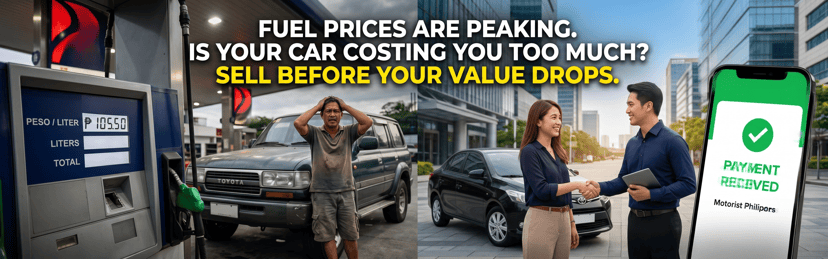 The National Energy Emergency is Here — Is Your Car Draining Your Bank Account?Owning a car used to feel like a one-time investment. But in 2026, many Filipino drivers are starting to realize that the real cost comes after you’ve already bought it. Following the National Energy Emergency declared in March 2026, global supply disruptions have pushed local pump prices to record-breaking levels, with gasoline breaching the ₱100 per liter mark and diesel exceeding ₱130. If your vehicle averages less than 10km/L, your daily commute isn't just a drive—it’s a growing financial burden that could be costing you thousands in extra expenses every month.
The Cost of Fuel is Increasing Across the Board
In recent years, the cost of keeping a car on the road has gone up significantly. Under the state of energy emergency, traditional fuel-dependent vehicles are facing the brunt of inflation. Whether it’s the rising cost of logistics or the direct price at the pump, the "gas-guzzler tax" is real, even if it isn't on your official tax form. For many, every full tank now feels like a major financial blow, making large SUVs and older, less efficient models harder to justify as daily drivers.
Older Engines Struggle with New Fuel Realities
As your car ages, its engine efficiency naturally declines. What used to be an acceptable fuel consumption rate can drop significantly due to carbon buildup, worn sensors, or aging fuel systems. In the context of 2026's high fuel costs, these minor mechanical inefficiencies are amplified. A car that was "okay" last year is now a liability. These recurring fuel costs, combined with the lack of modern start-stop technology or hybrid assistance, make it harder to justify keeping the car.
Hidden Costs You Might Be Overlooking
Beyond the price at the pump, there are hidden costs to owning an inefficient vehicle during an energy crisis. In 2026, the government has implemented measures like the four-day workweek for public sectors to curb fuel demand, but private owners don't have that luxury. Furthermore, resale values for high-consumption vehicles are dipping as buyers move aggressively toward hybrids and EVs. If you wait too long to sell, you might find yourself stuck with a vehicle that nobody wants to buy because it’s too expensive to fuel.
Why Some Owners Choose to Sell Early
Instead of watching their monthly budget disappear into a gas tank, many car owners are choosing to sell their vehicles while they still hold value. Selling early allows them to switch to more fuel-efficient options—like compact sedans or the surging hybrid market—before the resale price of "thirsty" vehicles bottom out. It also gives them the liquid cash to invest in a "greener" plate that is exempt from coding and high fuel expenses.
Should You Keep or Sell Your Car?
If your weekly fuel bill has doubled and you find yourself limiting your trips just to save money, it may be time to rethink your decision. Keeping your car might feel familiar, but the long-term costs in a high-fuel-price environment can outweigh the benefits. Selling now could help you avoid further financial loss and maximize your car’s current value before the market becomes saturated with other owners trying to offload their gas-heavy vehicles.
Expert FAQ Section
How has the 2026 National Energy Emergency affected car ownership?
The emergency has caused fuel prices to spike past ₱100/liter, significantly increasing the monthly cost of ownership for non-hybrid vehicles.Are "gas guzzlers" losing their resale value?
Yes. As fuel prices stay high, buyer demand is shifting toward compact cars and hybrids, making larger, older engines harder to sell.Is it worth switching to a hybrid in 2026?
Given the tax exemptions under EVIDA and the current fuel crisis, hybrids offer significant long-term savings for daily commuters.When is the best time to sell a high-consumption vehicle?
Ideally, before the next scheduled fuel price hike or before your vehicle reaches a high-mileage bracket where efficiency drops further.How do I find out how much my car is worth today?
A real-time market valuation that accounts for current fuel trends and buyer demand is the most accurate way to check your car’s worth.
Your Old Car? Sell It to Motorist Philippines
If your car is costing you more every month at the pump, it might be time to turn that cost into value. Instead of spending more on expensive fuel, you can sell your car while demand for used vehicles is still active.
Motorist Philippines offers:
Trusted sell car services
Free car valuations based on real market demand
Access to serious buyers
Fast and hassle-free process
Before the fuel crisis drains your savings—your old car, sell it to Motorist.