Sell financed car Philippines 2026: Escape heavy auto loans safely
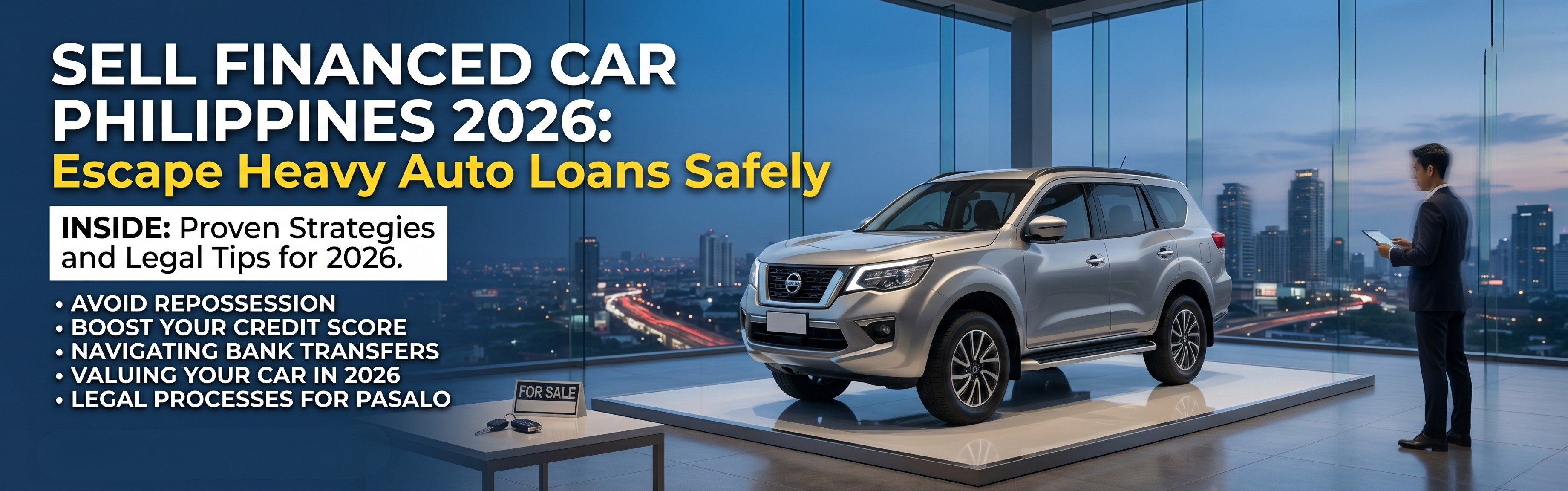 Is Your Auto Loan Eating Up Your Budget? How to Sell Your Financed Car Before It Becomes a Trap
Owning a car used to feel like a one-time investment. But in 2026, many Filipino drivers are starting to realize that the real cost comes after you’ve already bought it. If you purchased a vehicle a few years ago on a 5-year financing plan, the economic landscape has drastically changed. With the rising cost of living, inflation, and increasing daily expenses in Metro Manila, that monthly auto loan amortization that once felt manageable might now be suffocating your household budget. If you are struggling to make ends meet just to keep your car, holding onto it could be a fast track to financial ruin.
The Cost of Ownership is Increasing Across the Board
In recent years, the total cost of maintaining a car while paying off a loan has gone up significantly. Your budget isn't just taking a hit from the fixed bank payment—it’s the compounding effect of 2026 fuel prices, rising toll fees, and escalating insurance premiums. When your monthly car payment is combined with the everyday costs of actually driving it, the financial burden is no longer as affordable as before. Every month, a huge chunk of your salary is being diverted just to keep the car in your garage.
Financed Cars Eventually Require Out-of-Pocket Repairs
As your financed car ages into its third or fourth year, its manufacturer warranty often expires, and critical components naturally begin to wear out. This creates a dreaded "double financial burden": you are still paying the bank a high monthly premium for the car, but you are now also paying out-of-pocket for expensive PMS (Preventive Maintenance Schedule) and repairs. These recurring maintenance costs can quickly add up, making it harder to justify keeping the car when you are paying for both the loan and the mechanic.
Hidden Costs You Might Be Overlooking
Beyond the standard expenses, there is the hidden, compounding cost of financial stress and bank penalties. Missing just one or two payments introduces hefty late fees and penalty interest rates. Furthermore, informal workarounds like the risky "Pasalo" (assume balance) system can lead to legal nightmares if the new buyer defaults, as the loan remains strictly under your name. Combined with the very real threat of bank repossession—which permanently damages your credit score—the total risk of holding onto an unaffordable car is much higher than expected.
Why Some Owners Choose to Sell Early
Instead of waiting for the bank to send a repossession notice, many proactive car owners are choosing to sell their financed vehicles to authorized platforms. Selling early allows them to legally pay off the remaining bank balance, clear their name from the debt, and often pocket the remaining equity (the difference between the car's market value and the loan payoff amount). It is a clean, stress-free financial reset that protects their credit standing and frees up their monthly cash flow.
Should You Keep or Sell Your Financed Car?
If you find yourself anxiously waiting for payday just to cover your car loan, it may be time to rethink your decision. Keeping your car might feel like you are protecting your initial investment, but the long-term stress and risk of repossession can easily outweigh the benefits of ownership. Selling now could help you avoid penalty fees, clear your debt legally, and maximize your car’s current value before the financial strain becomes unmanageable.
Expert FAQ Section
1. Can I legally sell my car if it is still mortgaged to the bank?
Yes. However, the bank must be paid off to release the original Certificate of Registration (CR). Professional car-buying platforms can facilitate this payoff process directly with your bank.
2. Is the "Pasalo" (Assume Balance) method safe?
No. It is highly discouraged and often violates your bank contract. If the person who assumed the balance stops paying or gets into an accident, you remain legally and financially responsible.
3. What happens to my credit score if my car is repossessed?
A repossession severely damages your credit rating in the Philippines, making it incredibly difficult to get approved for future housing loans, credit cards, or personal loans.
4. Will I get any cash back if I sell my financed car?
It depends on your "equity." If your car's current market value is ₱800,000 and your remaining bank loan is ₱500,000, you keep the ₱300,000 difference after the loan is settled.
5. How do I know how much my financed car is worth today?
Getting a free, professional market valuation will help you compare your car’s current worth against your latest bank statement balance.
Your Old Car? Sell It to Motorist Philippines
If your car loan is keeping you awake at night, it’s time to turn that debt into relief. Instead of risking bank penalties or illegal "pasalo" deals, you can sell your financed car safely and legally.
Motorist Philippines offers:
Trusted sell car services (including financed vehicles)
Free car valuations based on real market demand
Assistance with bank loan payoffs and paperwork
Fast and hassle-free process
Before the late fees pile up—your old car, sell it to Motorist.