Sell discontinued car Philippines 2026: Avoid expensive spare parts
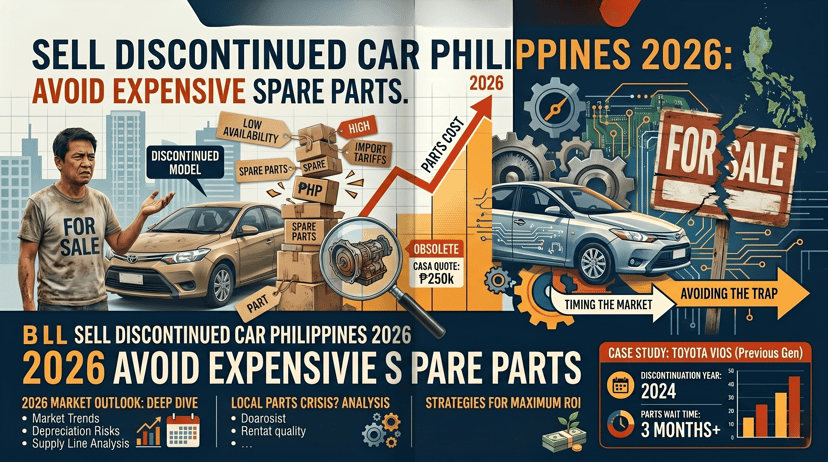 Your Car Model Was Discontinued — Are You Ready for the "Parts Scarcity" Nightmare?
Owning a car used to feel like a one-time investment. But in 2026, many Filipino drivers are starting to realize that the real cost comes after you’ve already bought it. Imagine finding out that the manufacturer of your daily driver has officially discontinued your model, or worse, the entire brand has pulled out of the Philippine market. Suddenly, your reliable ride becomes an "orphan car." If you are driving a discontinued vehicle, keeping it might mean exposing yourself to a frustrating world of scarce spare parts, massive repair delays, and plummeting resale values.
The Cost of Scarcity is Increasing Across the Board
In recent years, the cost of maintaining a discontinued model has gone up significantly. When a car is no longer in production, authorized dealerships (casas) slowly stop stocking its specific components. What used to be a quick trip to the service center for a replacement sensor or bumper now turns into a frantic hunt across Banawe or an expensive international order online. Because these parts are no longer mass-produced, third-party sellers heavily mark up their prices. Every time your orphan car breaks down, it hits harder on your wallet simply because of supply and demand.
Mechanics Are Reluctant to Fix "Orphan Cars"
As your discontinued car ages, independent mechanics become hesitant to work on it. Modern cars rely on brand-specific diagnostic scanners and software updates. When a brand scales back its local operations, third-party shops lose access to these vital technical resources. If a mechanic cannot easily source parts or find the digital repair manual for your car, they will either refuse the job entirely or charge you a premium "headache fee" for the extra labor involved in figuring it out.
Hidden Costs You Might Be Overlooking
Beyond the expensive parts, the biggest hidden cost of owning an orphan car is "Downtime." In 2026, waiting for a proprietary water pump or transmission control module to be shipped from overseas can leave your car sitting on jacks for two to three months. During that time, you are forced to spend heavily on Grab, carpools, or public transport just to get to work. Combined with the stress of scouring Facebook groups and junkyards for a single headlight housing, the total mental and financial toll is much higher than expected.
Why Some Owners Choose to Sell Early
Instead of holding onto a vehicle that is becoming impossible to maintain, many pragmatic car owners are choosing to sell their discontinued models while they are still in good running condition. Selling early allows them to cash out before a major component fails—a failure that could effectively total the car if the part can't be found. By transferring the vehicle to a specialized buyer or an enthusiast who has the time to hunt for parts, the original owner can use the funds to upgrade to a mainstream, widely supported model.
Should You Keep or Sell Your Discontinued Car?
If you recently heard the news that your car model is being axed, or if you are already waiting six weeks for a basic suspension part to arrive from abroad, it may be time to rethink your decision. Keeping an orphan car might feel like you are being loyal to your vehicle, but the escalating cost of parts scarcity and massive repair downtime can drastically outweigh the benefits. Selling now could help you avoid a permanent breakdown and maximize your car’s current value before the general market completely blacklists the model.
Expert FAQ Section
1. How fast does a car's value drop after the model is discontinued?
An immediate depreciation hit of 10% to 20% is common once the public realizes the model or brand is leaving. The value continues to sink rapidly as spare parts become noticeably harder to find in local shops.
2. Do manufacturers legally have to provide parts for discontinued cars?
While manufacturers generally pledge to produce parts for up to 10 years after a model ends, global supply chain shifts in 2026 mean these parts are often backordered for months and rarely stocked locally in the Philippines.
3. Are surplus or "chop-chop" parts a safe alternative?
For cosmetic items like doors and mirrors, yes. But relying on surplus electrical components, sensors, or transmission parts is highly risky and often leads to recurring breakdowns.
4. Who buys discontinued or "orphan" cars?
Usually, brand enthusiasts, specialized mechanics, or buyers in provinces where they have their own trusted fabrication shops. Finding these specific buyers on your own is difficult.
5. How do I get a fair price for a car that nobody wants to maintain?
Using a digitized car-selling platform ensures your vehicle is shown to a massive network of verified dealers, some of whom specialize in discontinued models and will offer a fair market price.
Your Old Car? Sell It to Motorist Philippines
If hunting for spare parts is becoming a part-time job, it’s time to turn that frustration into a fresh start. Instead of waiting for your car to break down permanently, you can sell your discontinued vehicle safely and swiftly.
Motorist Philippines offers:
Trusted sell car services for all makes and models
Free car valuations based on real market demand
Access to specialized buyers and a nationwide dealer network
Fast and hassle-free process
Before your car becomes a permanent garage ornament—your old car, sell it to Motorist.