MMDA Estero Cleanup July 2026: Metro Manila Traffic Impact
 July 1, 2026 MMDA Updates: Massive Estero Cleanups and Pedestrian Zones—Is Your Commute Ready?
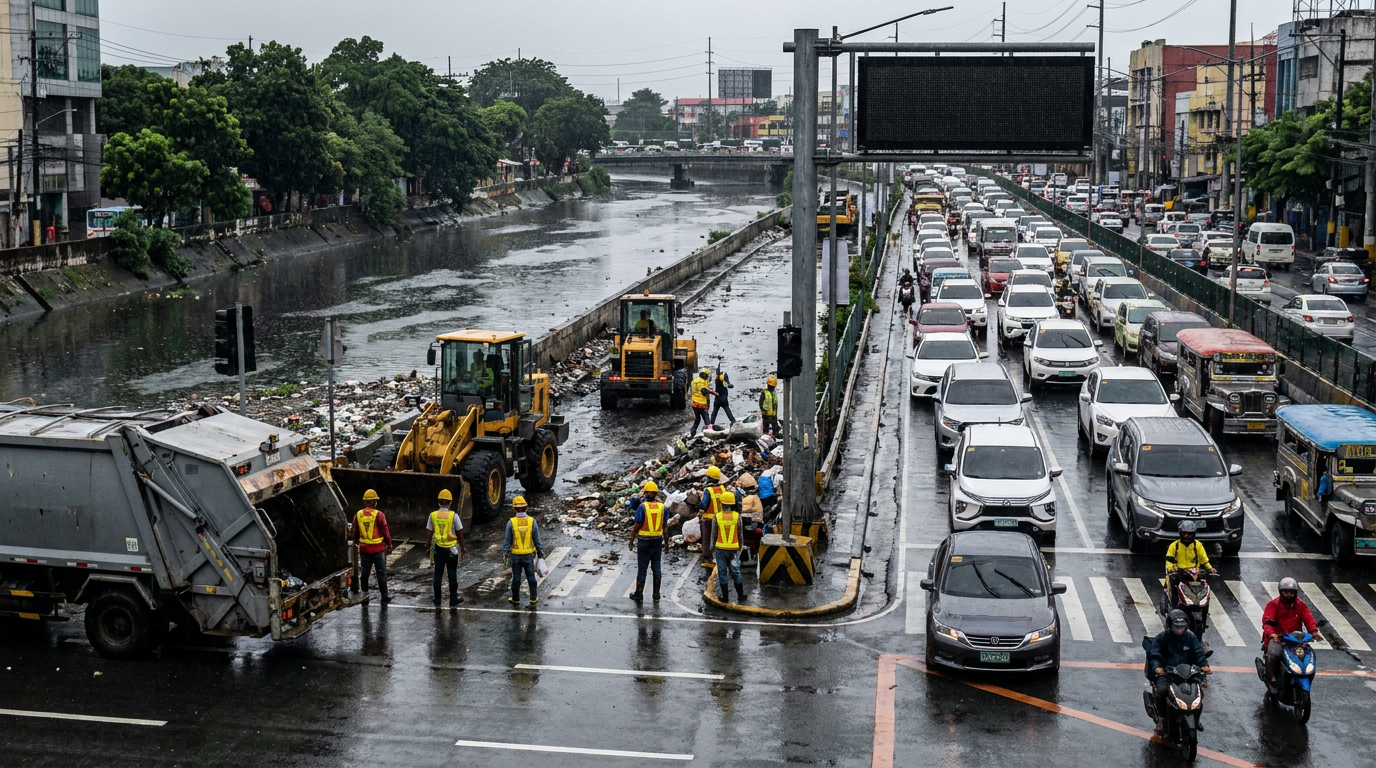
If you are driving around Metro Manila today, July 1, 2026, you might notice a sudden surge of activity along the city's waterways and major avenues. In a frantic bid to mitigate the severe urban flooding that has already plagued the capital early this rainy season, the Metropolitan Manila Development Authority (MMDA) has launched a massive, multi-agency infrastructure and cleanup campaign. From extensive drainage clearing operations to the inauguration of new pedestrian footbridges, the city is undergoing rapid physical changes. While these projects are vital for public safety, for the everyday private car owner, they guarantee one thing: more lane closures, more unpredictable traffic, and an increasingly stressful daily commute.
The "Bayanihan sa Estero" Drainage Cleanup
Earlier today, the MMDA and the Department of Labor and Employment (DOLE) officially signed a memorandum of agreement (MOA) to provide emergency employment to 10,000 workers under the TUPAD program. These beneficiaries are being immediately deployed across Metro Manila to clear the region's heavily clogged drainage systems and esteros under the "Bayanihan sa Estero" initiative.
While this massive cleanup is an absolutely necessary step to prevent knee-deep floods, the logistics of deploying 10,000 workers alongside heavy dredging equipment means that motorists should expect sudden, localized lane closures near bridges, creeks, and major waterways over the coming weeks. Navigating these temporary bottlenecks will require extra patience and careful route planning, as side streets typically used as shortcuts may be temporarily blocked by cleanup crews.
Prioritizing Pedestrian Safety in Quezon City and Manila
Alongside the estero cleanups, the MMDA is aggressively pushing for pedestrian-first infrastructure. Today, MMDA Chairman Atty. Don Artes inaugurated a new pedestrian footbridge along Visayas Avenue in Quezon City, specifically designed to protect the 1,400 students and pedestrians crossing the busy thoroughfare daily.
Furthermore, the MMDA announced that the massive Kamuning footbridge will soon be dismantled and relocated to the heavily trafficked area in front of the University of Santo Tomas (UST) in Manila. These dismantling and construction operations involve heavy machinery, road blockades, and complex power line adjustments, guaranteeing significant traffic slowdowns and rerouting on EDSA-Kamuning and España Boulevard in the near future.
The Reality of Driving in a City Under Construction
Metro Manila is essentially a massive, moving construction zone right now. Between the ongoing TUPAD drainage cleanups, the complex footbridge relocations, and the constant threat of sudden monsoon floods, driving a private vehicle is becoming an exercise in pure endurance. The constant stop-and-go traffic around these public works not only destroys your car's fuel efficiency but also significantly increases the risk of minor fender-benders and accelerated mechanical wear on your brakes and transmission.
Why Smart Commuters are Cashing Out
Instead of continuing to subject their expensive vehicles to the daily grind of construction zones and flooded detours, many Metro Manila residents are choosing a different path. By selling their heavy daily drivers now, they are cashing out their vehicle's equity before the harsh rainy season and constant urban gridlock cause permanent depreciation. The funds from the sale are increasingly being redirected toward smarter mobility solutions—like downsizing to a more agile compact car, utilizing premium public transit, or upgrading to highly efficient hybrid vehicles that can handle hours of stop-and-go traffic without burning a hole in your wallet.
Expert FAQ Section
1. What is the MMDA-DOLE "Bayanihan sa Estero" project launched today, July 1, 2026?
It is a joint initiative that deploys 10,000 TUPAD workers to clear Metro Manila's heavily clogged drainage systems and waterways to mitigate severe urban flooding during the rainy season.
2. Where was the new MMDA pedestrian footbridge inaugurated today?
The new footbridge was inaugurated along Visayas Avenue in Quezon City, right in front of the Maria Montessori School, to ensure the safety of pedestrians crossing the busy 36,000-vehicle-a-day thoroughfare.
3. What is happening to the EDSA-Kamuning footbridge?
The MMDA announced that the Kamuning footbridge will be dismantled in the coming months and relocated to Manila City, right in front of the University of Santo Tomas (UST).
4. How will these MMDA projects affect Metro Manila traffic?
The deployment of 10,000 cleanup workers near waterways and the heavy machinery required to dismantle and relocate footbridges will inevitably cause localized lane closures, detours, and heavy traffic bottlenecks across the metropolis.
5. Why is this a good time to sell my daily commuter car?
With Metro Manila roads becoming highly congested due to public works, flooding, and cleanup operations, navigating a private car is incredibly stressful and fuel-intensive. Selling your car now protects its equity from wear-and-tear depreciation and gives you the cash to rethink your daily commute.
Your Old Car? Sell It to Motorist Philippines
Are the endless Metro Manila construction zones, drainage cleanups, and traffic bottlenecks draining your patience? Don't let the harsh city roads destroy your car's resale value.
Motorist Philippines offers:
Trusted sell car services
Free, data-driven car valuations based on real-time July 2026 market demand
Access to a nationwide network of verified buyers
Fast, transparent, and completely hassle-free transactions
Before you get stuck in another estero cleanup detour—your old car, sell it to Motorist.