EO 121 EVIS Program Philippines 2026: Sell Gas Car
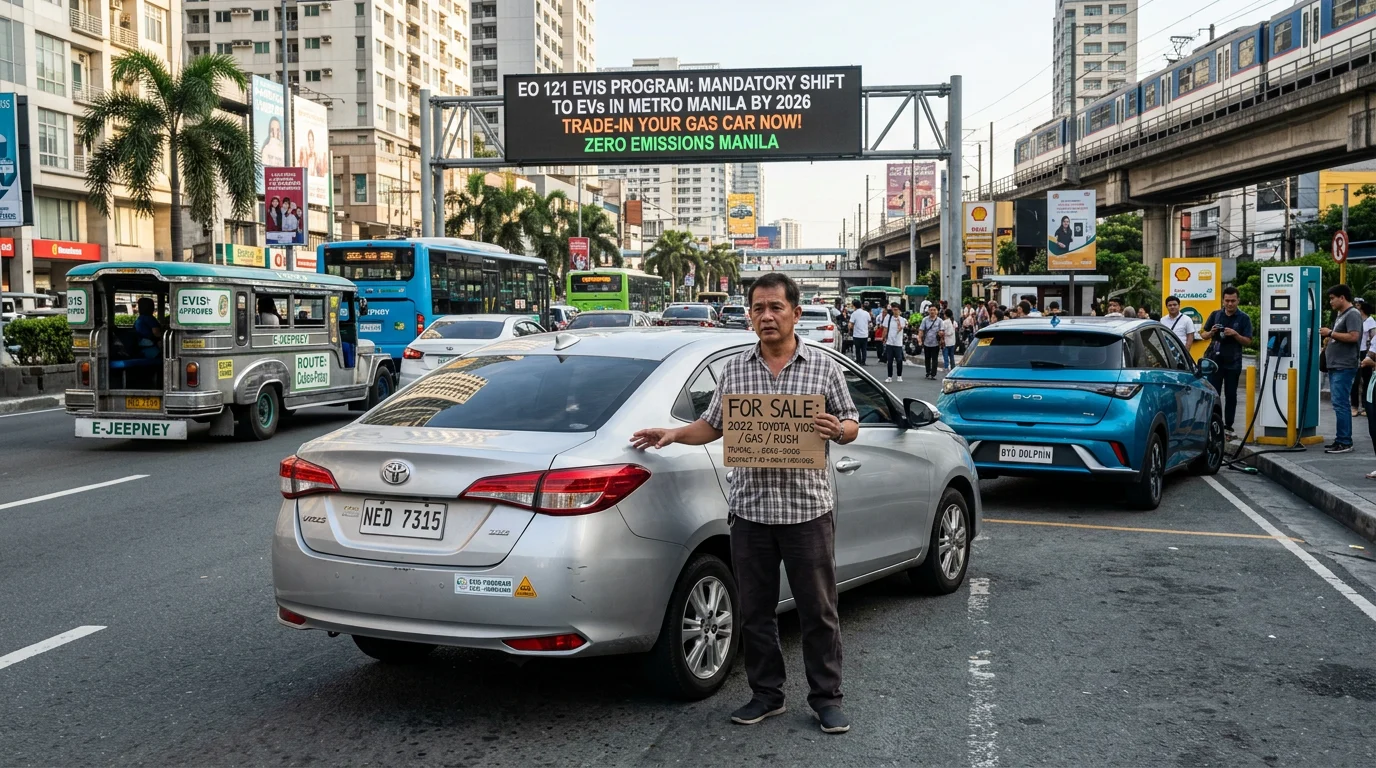 The ₱60 Billion EVIS Program: Why EO 121 Means It’s Time to Sell Your Gas Car
If you have been holding off on buying an electric vehicle due to high import prices, the Philippine government just flipped the script. In a massive move to reposition the country as a manufacturing hub, President Ferdinand Marcos Jr. recently signed Executive Order (EO) 121, officially launching the Electric Vehicle Incentive Strategy (EVIS) Program.
This historic policy puts up as much as ₱60 billion to encourage car companies to locally manufacture electric and hybrid vehicles, battery technologies, and spare parts. For the everyday Filipino motorist, this isn't just bureaucratic news—it is a glaring signal that high-quality, affordable electrified mobility is on the immediate horizon. Consequently, if you are still driving a traditional gas guzzler, its long-term resale value is officially on a ticking clock.
The Local Manufacturing Boom
For years, the Philippines has primarily been a consumer market, importing millions of finished vehicles while the advanced engineering value remained elsewhere. EO 121 changes this by offering meaningful incentives to automakers who establish genuine, local production operations for hybrids, plug-in hybrids, battery-electric vehicles, and commercial components.
The industry response has been immediate and massive. Mitsubishi Motors Philippines Corporation (MMPC) is already eyeing a ₱7 billion investment under the EVIS program. According to MMPC chairperson Noriaki Hirakata, the brand is considering establishing a modern EV battery assembly facility locally, bringing next-generation technology directly to our shores.
Cheaper Hybrids and EVs are Coming
What does a ₱60 billion industrial policy mean for your wallet? When vehicles and their batteries are manufactured locally rather than imported, the massive savings in logistics, tariffs, and taxes are passed down to the consumer. Authorities project that once domestic EV production is fully operational, the prices of EVs could decline by 6 to 12 percent compared to present levels.
Furthermore, the EVIS program practically guarantees that Filipino motorists will have better, localized access to spare parts and after-sales service, completely eliminating the old fear of expensive EV maintenance.
The Impending Used Gas Car Crash
When the government actively subsidizes the production of cutting-edge, highly efficient vehicles, the secondary market for traditional internal combustion engine (ICE) cars takes a severe hit.
Why would a sensible buyer in the near future pay top peso for your five-year-old, gas-thirsty sedan when they can purchase a locally-built, highly-incentivized hybrid for a competitive price? As EV and hybrid prices drop, the demand for traditional gas cars will plummet, forcing used car sellers to aggressively slash their asking prices.
The Smart Exit: Liquidate Today
If your primary daily driver relies entirely on expensive gasoline, you are holding onto an asset that is fundamentally misaligned with the country's new industrial trajectory. The smartest financial move you can make this August 2026 is to liquidate your traditional vehicle before the EVIS program fully saturates the market with affordable electrified options.
Selling your car today allows you to secure its maximum remaining cash equity. You can then position yourself to take full advantage of the upcoming wave of locally-manufactured hybrids and EVs, bypassing the gas pump entirely and supporting the future of Philippine mobility.
Expert FAQ Section
What is the Electric Vehicle Incentive Strategy (EVIS) Program?
It is a government initiative, enacted through Executive Order 121 by President Ferdinand Marcos Jr., that allocates up to ₱60 billion to encourage the local manufacturing of EVs and hybrid vehicles.How will EO 121 affect the price of electric vehicles?
Authorities expect that once local EV manufacturing is fully operational, EV prices could drop by 6 to 12 percent.Are car brands already investing in this program?
Yes. Mitsubishi Motors Philippines Corporation (MMPC) has expressed its commitment to invest at least ₱7 billion to potentially establish a modern hybrid EV battery assembly facility in the country.Does the EVIS program only cover fully electric vehicles?
No. The program covers a wide range of electrified mobility, including locally manufactured battery-electric vehicles, hybrids, plug-in hybrids, and fuel-cell vehicles.Why is this bad news for my traditional gas car's resale value?
As the government incentivizes local production, cheaper and more accessible EVs will flood the market. This shift will drastically lower consumer demand for older, gas-powered vehicles, pushing their resale values down.
Your Old Car? Sell It to Motorist Philippines
Stop letting your traditional gas car lose value as the electric revolution takes over! The Philippine automotive landscape is changing rapidly, and it is time to secure your car's true cash equity.
Motorist Philippines offers:
Trusted sell car services
Free, data-driven car valuations based on the latest August 2026 market shifts
Access to a nationwide network of verified buyers
Fast, transparent, and completely hassle-free cash transactions
Before the EVIS program crashes the used gas car market—your old car, sell it to Motorist.